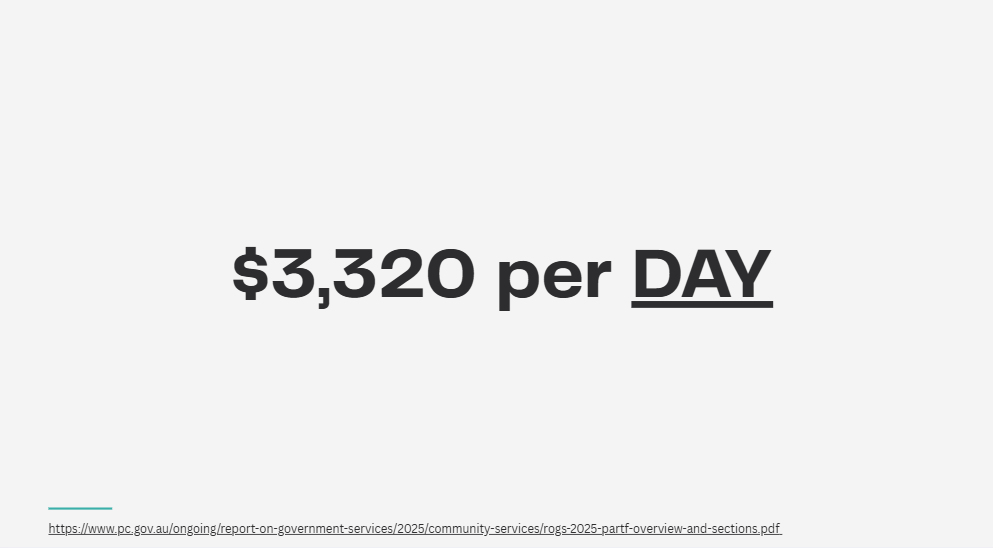
Per year, it costs around $𝟭.𝟮 𝗺𝗶𝗹𝗹𝗶𝗼𝗻 to keep one young person in custody in Australia.
And despite that investment, the outcomes remain devastatingly consistent: the rate of reoffending climbs to as high as 86% within 12 months.
𝗔 𝘀𝘆𝘀𝘁𝗲𝗺 𝗱𝗲𝘀𝗶𝗴𝗻𝗲𝗱 𝘁𝗼 𝗰𝗼𝗻𝘁𝗮𝗶𝗻, 𝗻𝗼𝘁 𝘁𝗿𝗮𝗻𝘀𝗳𝗼𝗿𝗺:
The pattern behind those numbers is structural. We continue to fund containment (beds, remand, administration) far more readily than we fund transition (stable housing, support networks, education and work pathways in the community). NSW trend data underline how policy emphasis has skewed towards remand and custody, with youth numbers in detention rising and bail refusals up.
At Praxis Youth, we aim to change this equation. For the cost of incarcerating a young person for two weeks, they could be housed and supported for two years — precisely the conditions linked to lower reoffending — at a fraction of detention costs. The question isn’t whether we can afford to invest in change; it’s whether we can afford not to.
Our system excels at managing risk inside the gate, but underinvests in what prevents returns under release. The national cost profile and return-to-supervision rates clearly reflect that imbalance.
𝗥𝗲𝘁𝗵𝗶𝗻𝗸𝗶𝗻𝗴 𝗮𝗻𝗱 𝗰𝗵𝗮𝗻𝗴𝗶𝗻𝗴 𝘀𝘆𝘀𝘁𝗲𝗺𝘀 𝗳𝗿𝗼𝗺 𝘁𝗵𝗲 𝗴𝗿𝗼𝘂𝗻𝗱 𝘂𝗽:
In Norway, recidivism is among the lowest in the world – around 18-20% reconviction within two years – under a model built on the principle of normality (punishment is loss of liberty; other rights remain), with education, work and relationships embedded into daily life.
Norway’s approach reveals key priorities in reducing youth recidivism and crime: stability, connection, skills and dignity from day one – exactly what housing-first re-entry aims to deliver.
Praxis Youth is built on a simple truth: 𝘯𝘰 𝘰𝘯𝘦 𝘤𝘩𝘢𝘯𝘨𝘦𝘴 𝘪𝘯 𝘪𝘴𝘰𝘭𝘢𝘵𝘪𝘰𝘯.
Our approach starts where the justice system is failing – with stable housing and the rebuilding of social networks that give young people belonging, accountability and purpose.
Systemic change doesn’t always start in parliament or policy rooms. Sometimes, it begins in a small apartment, with a young person who finally has a key, a roof and a reason to believe that tomorrow can look different.